









As the new year is welcomed in, many flock to create vision boards for an ideal 2026. Besides sourcing inspiration from real-life, websites like Pinterest allow people to explore global expression. The visual discovery engine allows users to explore images tailored to their interests, from home decor, to recipes, to fashion, and save, or “pin,” them to boards. The photos are uploaded by creatives around the world and are oftentimes linked to blogs and other outside sources sharing their creative process.
As early as 2015, Pinterest started to implement AI. The brand has since gone on to implement a “Pinterest Assistant” shopping tool, generative AI-powered boards, and automated advertising tools in the past three years.
In late 2025, Pinterest introduced AI-generated pins with the intention to enhance user experience. AI-modified images are detected and managed by the company, while product pins with personalized, AI-generated backgrounds are currently being tested. Content identified as such are labeled, and creators may choose to restrict their content from AI-modification and training models. Additionally, users are given the ability in settings to opt to see less of this content, though complete removal is unavailable.
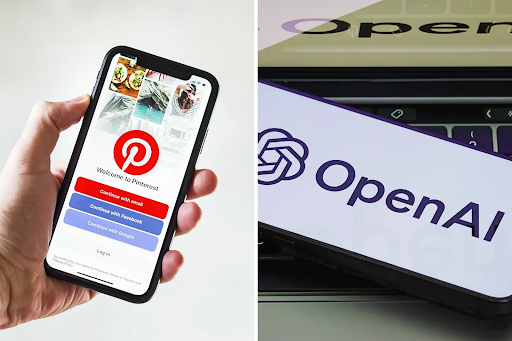
And so comes the threat of OpenAI’s proposed purchase of Pinterest. Compared to Meta or Google, OpenAI cannot simply draw user insight from a search or social network. They instead rely on third party data centers to power their AI interface, ChatGPT. By acquiring a social media app such as Pinterest, they benefit in feeding relevant data and tracking insights into trends and products. AI generated content would also make up a significant portion of a user’s feed, without the option to see less.
The deal is valued around $17.5 billion, OpenAI’s largest potential acquisition to date. However, this purchase is not without risk. If the company cannot monetize fast enough to justify the cost, it may lose connection to data insight as competitors become more relevant.
Baruch Labunski, a CEO at Rank Secure, a web design and marketing company, shared his concerns over this proposal. “Pinterest built its value on human curation and authentic inspiration [and] when AI starts generating that content at scale, the platform risks becoming just another feed of beautiful, but hollow recommendations.”
With the digital age changing at such a rapid speed, the intrinsic value of real content by real people becomes apparent. The community people have built in creative spheres online is under threat as AI floods people’s feed. The intimate and personal touches people have made to their work is lost, and what is pushed out sets unrealistic expectations for users. If the deal goes through, OpenAI risks alienating the creative community that provides just the data they need.
AI running an app based on human creativity is innately counterintuitive. Inspiration comes from all around us, be it out in the world or online. What Pinterest and many other apps have built for people is a space to share their skills and the beauty in our world. People can be inspired by recipes, moments, and styles they may have never thought to explore, growing into more appreciative and innovative people. The moment feeds are replaced with AI, human connection is lost. Instead of seeing new ideas, algorithms will push out recycled content that identify people as consumers, not creatives.
So where does this leave us? A decision about the deal will likely be released this summer. Until then, explore inspiration offline. Find real people that inspire you and find ways to inspire yourself. Creative communities are not confined to social media, consider joining local clubs and even bring a friend. Inspiration is all around us, so don’t follow an algorithm to tell you what to like. Go out and find it.